


Five Quotes That Reveal How Great Investors Actually Think
Most investing conversations focus on returns, market trends, or identifying the right opportunity. People often want to know what to buy and when to act. While these questions matter, they can overlook a more important factor that shapes long-term outcomes.
Experienced investors often begin by focusing on how they think.
They recognise that markets move in cycles and that uncertainty is unavoidable. What can be influenced, however, is behaviour how one responds to volatility, temporary declines, or extended periods when results may not meet expectations.
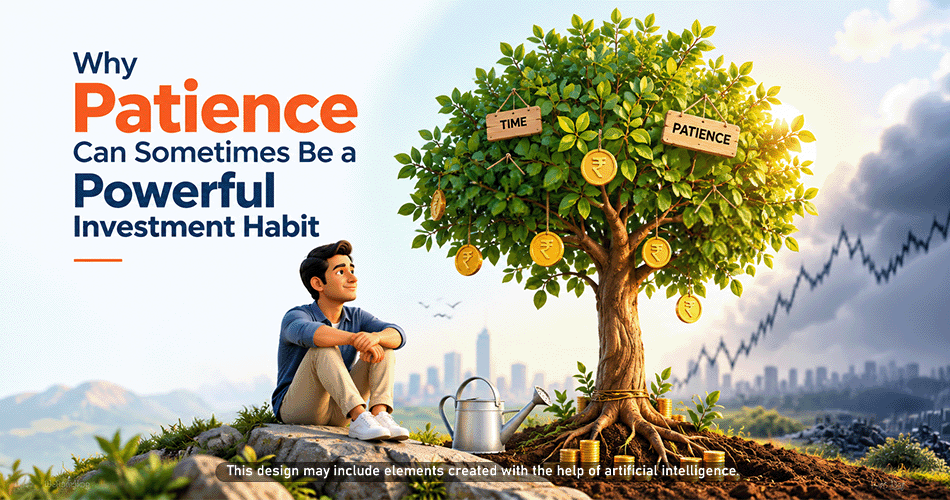
Rather than relying on predictions or frequent action, disciplined investors tend to follow clear principles. They prioritise patience over urgency, discipline over emotion, and a consistent process over short-term outcomes. Over time, this mindset can influence investor behaviour, much like the effect of compounding.
The quotes below offer a glimpse into the thinking that has helped investors navigate market cycles with greater clarity and confidence, without constant second-guessing.
— Warren Buffett
The quote highlights that long-term investing outcomes are often influenced more by time and discipline than by speed or frequent action. Many investors expect consistent or quick results, but markets rarely move in a smooth or predictable manner. Periods of uneven performance or limited visible progress are common. During such phases, some investors may exit prematurely, alter strategies, or shift towards recently performing assets, which can limit the potential benefits of staying invested over the long term.
When investors internalise this perspective, they are less likely to view short-term volatility as a trigger for immediate action. Instead of responding emotionally to temporary market movements or slower phases, they remain aligned with their long-term approach. This can help reduce unnecessary portfolio changes and allow the investment process to continue without frequent interruption. Over time, such consistency may help investors remain aligned with their long term approach
Investors can apply this thinking by setting realistic expectations, defining long-term objectives, and avoiding excessive monitoring of short-term performance. Having a clear investment purpose can make it easier to remain invested during uncertain or uncomfortable periods. Accepting patience as part of the investing journey helps investors stay aligned with market participation that rewards consistency rather than frequent decision-making.
— Peter Lynch
The quote highlights that investing without adequate understanding is a common reason for poor decision-making. When investors allocate money based solely on popularity, recent performance, or external opinions, they may lack clarity about what they own and why it forms part of their portfolio. In such situations, even routine market fluctuations can lead to uncertainty, discomfort, and confusion.
Understanding brings clarity, and clarity can support confidence. When investors are aware of the nature of their investments and the purpose each serves, they are less likely to respond emotionally to short-term market movements. This perspective can help them stay invested during challenging periods, reduce unnecessary portfolio changes, and remain aligned with long-term objectives rather than short-term performance.
Investors can apply this approach by clearly identifying the role of each investment before committing funds. Knowing whether an investment is intended for long-term growth, stability, or income can help set realistic expectations. During periods of market volatility, revisiting this original purpose may help discourage impulsive decisions and reinforce a disciplined investing approach.
— Benjamin Graham
The quote suggests that one of the most significant challenges in investing often comes from an investor’s own behaviour rather than from markets, economic conditions, or external events. Markets naturally move through phases of optimism and uncertainty. During such periods, investors may act on emotions instead of reason, leading to decisions that can move them away from their long-term approach. These reactions can sometimes turn short-term market movements into long-lasting outcomes.
Recognising this idea encourages investors to shift focus from external factors to personal discipline. When investors become aware of their emotional responses, they may be more cautious about acting impulsively. This awareness can help them remain patient during market declines, avoid excessive confidence during strong phases, and maintain a more consistent investing approach across market cycles.
Investors can apply this insight by establishing a structured investment plan and following it consistently, irrespective of short-term market developments. Setting predefined guidelines, limiting the frequency of portfolio reviews, and avoiding emotionally driven decisions during volatile periods can help reduce avoidable errors. Over time, managing behaviour can become an important part of the overall investing process.
— Charlie Munger
The quote emphasises that a significant part of the investing process unfolds after the initial investment decision is made. Many investors assume that success depends primarily on identifying the right time to buy or sell. In practice, markets do not consistently reward frequent activity. Periods of uncertainty, muted performance, or temporary declines are common, and allowing investments time to move through these phases can be an important part of long-term participation in markets.
This perspective can help investors become more comfortable with periods of limited activity. Instead of feeling compelled to make frequent changes, they may develop greater trust in time and the investment process. This approach can reduce emotional responses to short-term market movements and discourage decisions driven by impatience or fear. Over extended periods, such discipline may help investors remain aligned with their long term approach
Investors can apply this thinking by defining a long-term investment horizon and committing to remain invested across different market cycles. Limiting frequent portfolio reviews, filtering out short-term market noise, and keeping attention on long-term objectives can help reinforce patience. Allowing investments adequate time to evolve may help investors stay invested during market cycles.
— John C. Bogle
The quote reflects the reality that markets regularly test an investor’s confidence. Economic cycles, market corrections, global developments, and periods of underperformance are a natural part of investing. Investors who alter direction each time markets become uncomfortable may end up making decisions at inopportune moments. The quote reinforces the idea that a thoughtfully structured investment approach is intended to endure market fluctuations, and stepping away from it mid-way can affect long-term outcomes.
Adopting this mindset can provide greater emotional balance during uncertain periods. When investors commit to staying aligned with their approach, they reduce the pressure to respond to every short-term development. This can help them remain invested during market declines, avoid performance-driven decisions during rallies, and maintain consistency across different market conditions.
Investors can apply this thinking by clearly defining their goals, time horizons, and expectations at the beginning of the investing journey. Periodic reviews can focus on whether the approach continues to align with personal objectives rather than reacting to short-term market movements. By trusting the process, limiting responses to market noise, and maintaining discipline through volatility, investors may improve their ability to work towards long-term financial objectives.
Conclusion
When viewed together, these five quotes highlight a common theme in how experienced investors tend to approach markets. Their outcomes are shaped less by prediction, speed, or frequent activity, and more by clarity, patience, discipline, and emotional balance.
They seek to understand what they own and the purpose it serves. They recognise that markets move in cycles and that periods of uncertainty or discomfort are a natural part of the investing journey. Rather than responding to every market movement, they focus on remaining invested, allowing time to play its role, and following a well-defined approach.
Over the long term, investing is often less about anticipating market movements and more about managing behaviour. Investors who can remain patient through uneventful phases, manage emotions during volatility, and stay consistent with their process may remain aligned with long term investment participation.
These quotes serve as reminders that an important element of investing lies not only in market conditions, but in how investors think and act over time.
This content is for investor education purposes only. It should not be treated as investment advice or a recommendation. Mutual Fund investments are subject to market risks, Read all scheme related documents carefully.
© My Shubh Nivesh 2022. All rights reserved.